Why You Need SRC
South Africa's coast is a GMDSS Sea Area 1, so marine VHF radios use Digital Selective Calling (DSC) for distress alerts (channel 70, voice on channel 16). Every operator must hold an SRC; it follows IMO and ITU standards and is recognised worldwide.
SRC VHF Radio Course
R3,000
Includes: Full manual, exam, and one-day training.
SAMSA fee of R1,100 is paid separately.
Minimum 2 students required for group sessions.
Exam rewrite: R500 (no SAMSA fee)
Valid from 1 July 2026. VAT included.
Radio Curriculum
Radio Communications & GMDSS
Master the fundamentals of maritime radiotelephony and the Global Maritime Distress and Safety System (GMDSS), ensuring you are fully compliant with international maritime standards.
Radio Equipment & Systems
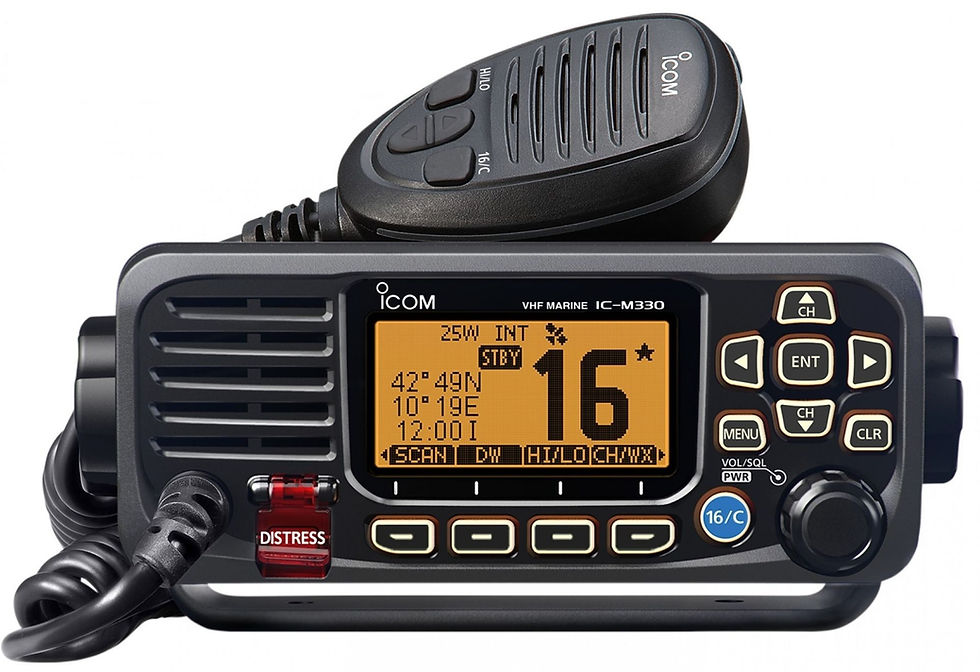
Hands-on training with Lightmaster simulators and real ICOM VHF radios, covering all essential equipment and operational procedures for modern marine vessels.
Distress & Safety Procedures
Comprehensive training in DSC distress alerts, EPIRBs, and SARTs, focusing on the critical protocols required to ensure the safety of life at sea.
Regulations & Radiotelephony
The radio regulations every VHF operator must know, including licensing, call signs and correct radiotelephony procedure, with practical exercises on the radio.

Radio Exam Standards
The Short Range Certificate (SRC) course is internationally recognized by the International Telecommunication Union (ITU) and the International Maritime Organization (IMO). Our training is conducted to the highest maritime standards, ensuring you are fully prepared for the theory and practical examinations. You will learn the essential radiotelephony procedures, GMDSS regulations, and emergency communication protocols required for safe navigation in South Africa's coastal waters.